I was invited to speak because I serve on the Genomics England Participant Panel. The Panel advises Genomics England on decisions relating to the data held within the National Genomics Research Library (NGRL), ensuring that the interests of patients and research participants remain at the heart of decision-making. We help researchers and scientists understand what life is really like for families living with rare conditions and remind them what matters most to the people behind the data.
I was eligible to join the Panel because my husband, our daughter Kirsty and I all had our genomes sequenced as part of the 100,000 Genomes Project. That project ultimately led to Kirsty receiving her OCNDS diagnosis in 2019.
Joining the Panel felt like a way to give something back to the organisation that finally gave our family answers after years of uncertainty. It also allows me to ensure that scientists never lose sight of the fact that behind every genomic data point is a real person, a real child and a real family. Our lived experiences deserve a voice in the decisions that affect research participants and future patients.
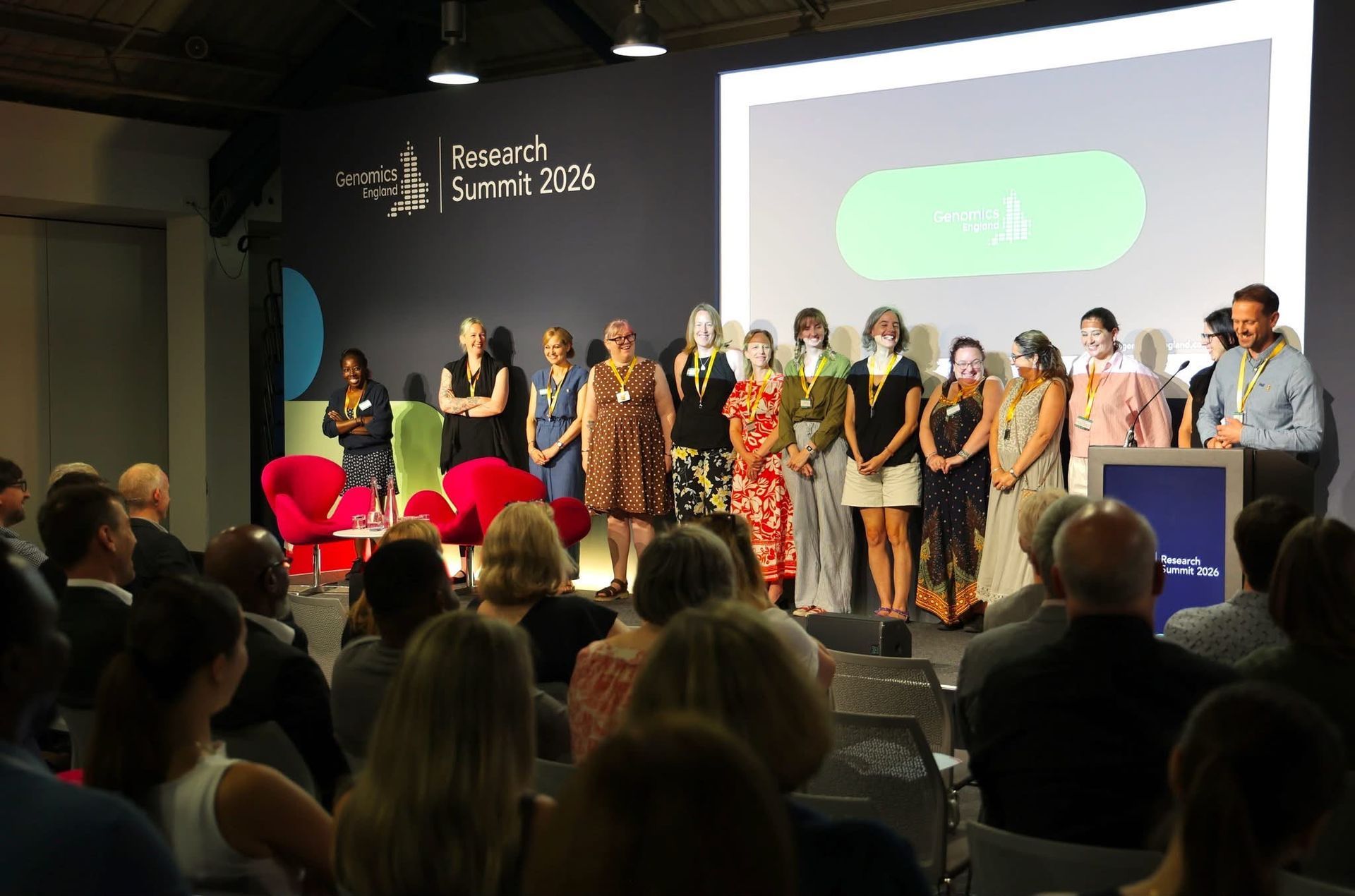
As part of the opening plenary, the entire Participant Panel was invited onto the main stage to celebrate the Panel’s 10-year anniversary. It was a memorable moment for more than one reason! As I walked onto the stage in front of around 600 people, my heel slipped down the back of the platform. I grabbed the person beside me to stop myself from falling—and nearly took them down with me! Thankfully we both stayed upright.
Following keynote presentations from Chair Baroness Nicole Blackwood, Professor Dame Sue Hill, Chief Scientific Officer for NHS England, and Professor Rich Scott, CEO of Genomics England, we moved to our individual stages.
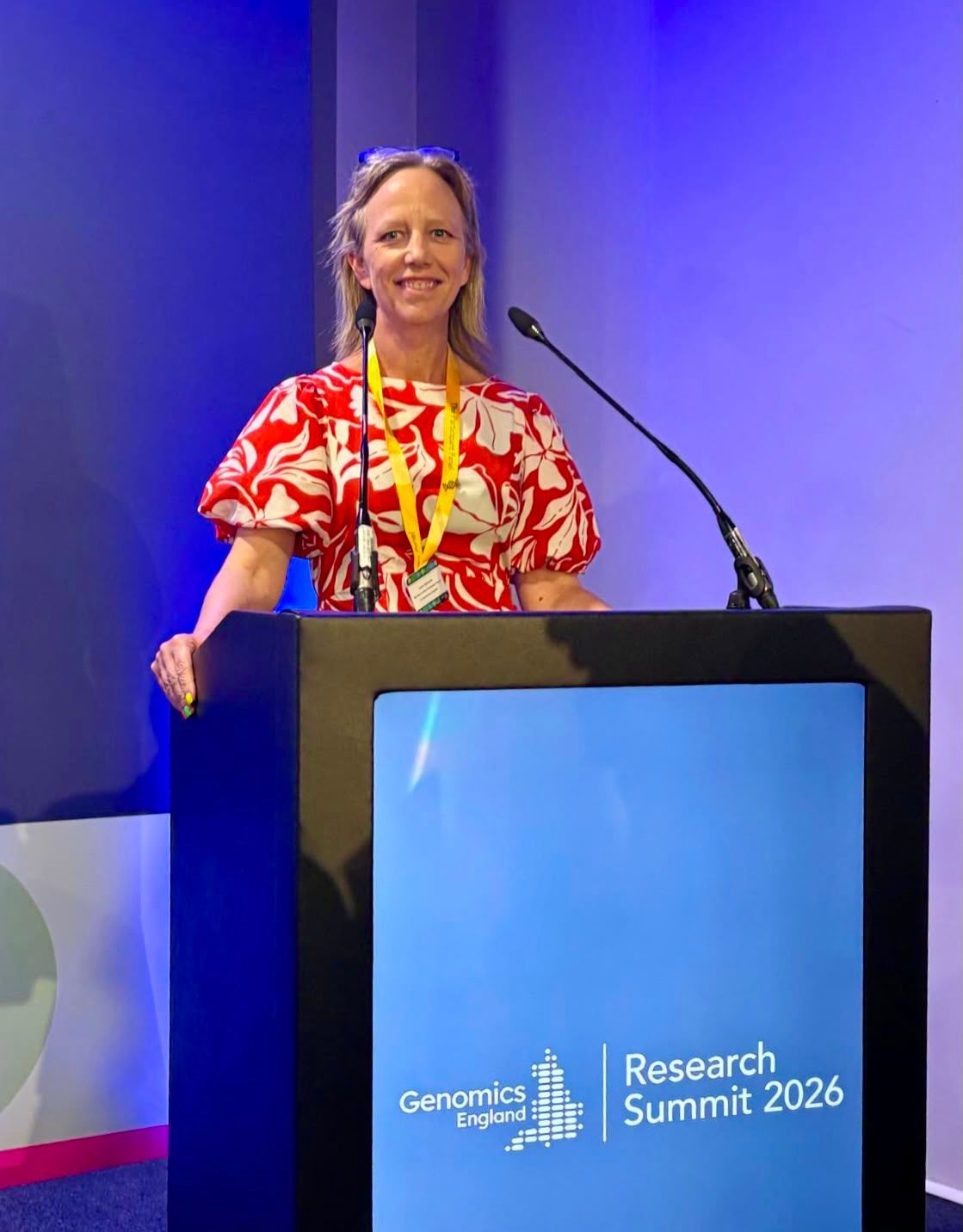
I was opening the Behind the Genes stage, named after the Genomics England podcast, where around 50 people gathered. I had just five minutes to share my journey.
I spoke about Kirsty’s diagnostic odyssey and the mixture of relief and heartbreak that came with finally receiving her diagnosis. Relief because we finally had an answer. Heartbreak because that answer came with so many unknowns. OCNDS was so rare that very little information existed.
I shared some of Kirsty’s symptoms and the impact they have on our daily lives, but I also spoke about something that completely changed our family’s journey: finding the CSNK2A1 Foundation.
Connecting with families who truly understood what we were experiencing gave us knowledge, friendship, hope and renewed strength. It also helped me become the advocate that Kirsty needed me to be.
The biggest lesson this journey has taught me is that community changes everything.
When families, researchers, clinicians and advocates come together, we do far more than share data. We create hope. We accelerate progress. We build relationships that lead to meaningful change. Most importantly, we remind one another that even in the rare disease world, none of us has to walk this path alone.
Public speaking has never come naturally to me, so I was incredibly nervous before stepping onto the stage. I am so grateful to Jennifer Sills and Adam Clatworthy for helping me prepare my presentation, which included photos of Kirsty, the CSNK2A1 Foundation logo and a group photo from last year’s Family Conference in Denver. Afterwards, I was humbled to receive such positive feedback from both Genomics England staff and my fellow Participant Panel members.
The rest of the day was spent attending fascinating sessions on diversity in genomics, pharmacogenomics, population health and polygenic risk scores. During the final session I had the opportunity to meet Professor Ian Abbs, Chief Medical Officer of Guy’s and St Thomas’ NHS Foundation Trust and Chair of the South East Genomic Medicine Service Partnership Board. As Chair of the South East Genomic Medicine Service People and Communities Committee, it was wonderful to finally meet him in person after attending many virtual meetings together.
I also spent time at the Genomics England Participant Panel stand, where I met members of the rare disease community and shared more about the work of the Panel.
Looking back, it was an enjoyable, inspiring and incredibly rewarding day. I am proud to have represented both the Genomics England Participant Panel and the CSNK2A1 Foundation.
This journey has pushed me far beyond my comfort zone in ways I never imagined. But if speaking up helps even one family feel less alone, encourages one researcher to see the people behind the science, or helps move rare disease research forward, then every moment of nerves was worth it.